If your shelves are overflowing and your back office looks like a stockroom, you already know the truth: growing a business in Saudi Arabia means finding somewhere sensible to keep your goods. Smart business inventory storage is one of the least glamorous but most profitable decisions a trader can make in 2026, especially when retail rents in Riyadh and Jeddah keep climbing. This guide walks through how wholesalers, retailers and small e-commerce sellers across the Kingdom can free up cash, protect stock and scale without signing a huge warehouse lease.
Why business inventory storage matters more than ever in 2026
Retail in the Kingdom is booming, and Vision 2030 has pushed a wave of new SMEs into wholesale and online selling. The problem is space. A shop that doubles as a warehouse loses selling floor, looks cluttered, and struggles to reorder efficiently.
Off-site storage flips that equation. You keep only display stock and fast movers on the shop floor, and hold bulk cases, seasonal lines and slow movers in a secure unit nearby. That single change can lift sales per square metre while cutting the stress of a jammed backroom.
The hidden cost of storing stock in prime retail space
Prime commercial rent is expensive precisely because customers walk past it. Using that same floor to stack boxes is like paying five-star hotel rates to store your suitcase. A dedicated storage unit costs a fraction of retail rent per square metre, and it never blocks a paying customer’s path to the till.
How much storage space does your inventory really need?
Guessing the size is where most first-timers go wrong. Measure your average and peak stock, not just today’s shelf. A useful rule is to size for your busiest month, then add roughly 15 percent for aisle access so you can actually reach the back cartons.
| Unit size | Rough capacity | Best for |
|---|---|---|
| Small (2–5 m²) | 10–30 medium cartons | Online sellers, sample stock, documents |
| Medium (6–12 m²) | 1 small van load, ~80 cartons | Boutique retailers, single-line wholesalers |
| Large (13–25 m²) | Pallet racking, seasonal bulk | Multi-brand shops, growing distributors |
| Extra-large (25 m²+) | Multiple pallets, light fulfilment | Established wholesalers, B2B suppliers |
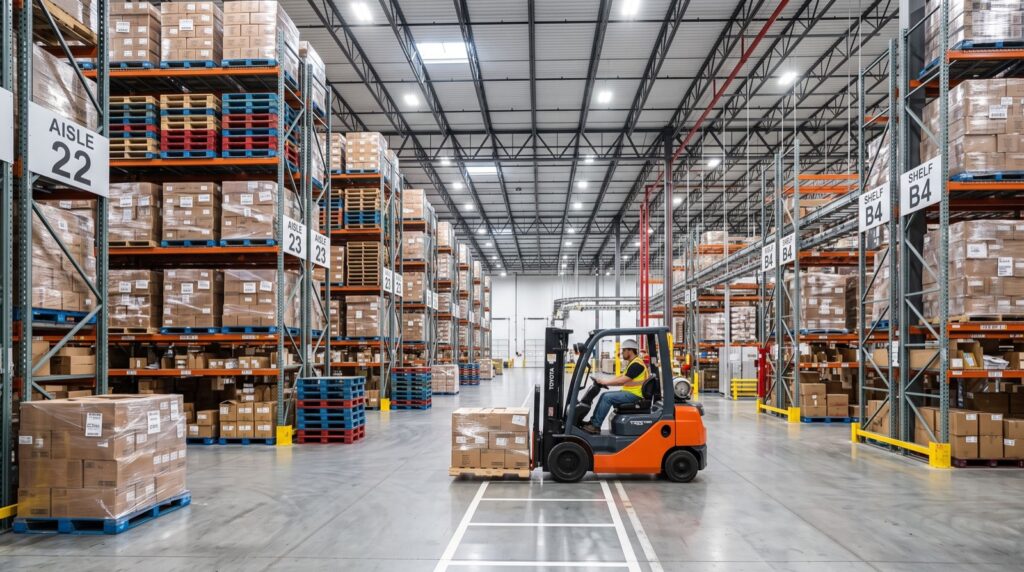
If you deal in pallets, look for a facility with drive-up access and enough ceiling height for racking. Firms offering dedicated Storage for Wholesalers and Retailers usually design their units around trade volumes rather than household boxes, which makes loading and stocktakes far quicker.
Organising a business storage unit for fast picking
A unit is only useful if you can find things in it. Treat it like a mini warehouse with a logic your staff can follow on their first day.
- Map a simple aisle layout and label every shelf or zone (A1, A2, B1) before you move a single box.
- Group by SKU velocity: fast movers nearest the door, dead stock at the back.
- Keep a running inventory sheet or app that matches the physical zones exactly.
- Store heavy cases low and light ones high to protect both stock and staff.
- Leave a clear central aisle wide enough for a hand truck or pallet jack.
Colour-coded labels and a laminated map on the door save hours over a year. One distributor I worked with in Dammam cut their monthly stocktake from a full day to under two hours simply by numbering zones and photographing each shelf.
Protecting stock from heat, dust and humidity
Saudi Arabia’s climate is unforgiving on packaging. Cardboard weakens in humidity, adhesives fail in extreme heat, and coastal cities like Jeddah and Dammam add salt air to the mix. For moisture-sensitive goods, choose a climate-managed option. For durable dry goods, a well-ventilated ambient unit is fine.
Coastal traders holding tools, packaged food or electronics often prefer a controlled Dry Storage In Dammam setup, where humidity is kept in check so cartons and contents stay stable through the summer months.
Self-storage versus a full warehouse lease
Many growing businesses assume they need to lease a warehouse. Often they do not. A commercial lease brings a deposit, a multi-year commitment, utility bills, security costs and maintenance. Flexible self-storage strips most of that away.
| Factor | Self-storage unit | Warehouse lease |
|---|---|---|
| Commitment | Monthly, easy to scale | Often 1–3 years |
| Upfront cost | Low deposit | Large deposit + fit-out |
| Security | Included (CCTV, access control) | You arrange it |
| Utilities | Usually included | Separate bills |
| Best for | SMEs, seasonal spikes | High-volume operations |
Because storage is a real cost of doing business, keep every invoice. The Zakat, Tax and Customs Authority treats legitimate operating expenses as part of your records, so tidy documentation helps at filing time. When you shortlist providers, compare access hours and support the same way you would vet any other supplier of quality service providers for your business.
When should a growing retailer move stock off-site?
There is no perfect date, but there are clear signals. Move sooner rather than later if any of these feel familiar.
- Staff waste time shifting boxes to reach other boxes.
- Your backroom is spilling onto the sales floor.
- You skip bulk-buy discounts because you have nowhere to put the stock.
- Seasonal inventory forces a scramble every quarter.
- You want to launch online fulfilment without renting a whole warehouse.
Frequently Asked Questions
Is business inventory storage secure enough for valuable stock?
Reputable facilities in 2026 offer 24/7 CCTV, individual unit locks, gated access and often on-site staff. For high-value goods, ask about access logs and whether the provider carries facility insurance, then add your own stock cover on top.
Can I access my business storage unit outside normal hours?
Many operators offer extended or 24-hour access, which is ideal for online sellers dispatching late or restocking a shop before opening. Confirm the exact access window and whether there is any surcharge before you sign.
How do I calculate the right unit size for my inventory?
Total your peak-season carton or pallet count, allow room to walk between rows, then round up one size. It is cheaper to have a little spare space than to overflow and rent a second unit mid-season.
Is self-storage cheaper than renting a warehouse in Saudi Arabia?
For most SMEs, yes. You avoid long leases, fit-out costs and separate utility and security bills, and you can scale the space up or down as sales change through the year.
The bottom line on business inventory storage
Getting your business inventory storage right in 2026 is a quiet competitive edge. It frees selling space, protects stock from the Saudi climate, and lets you buy in bulk without drowning in cardboard. Start by measuring your real peak volume, pick a secure unit that fits, organise it like a small warehouse, and keep your paperwork clean. Do that, and your storage stops being a headache and starts working as part of your growth plan.